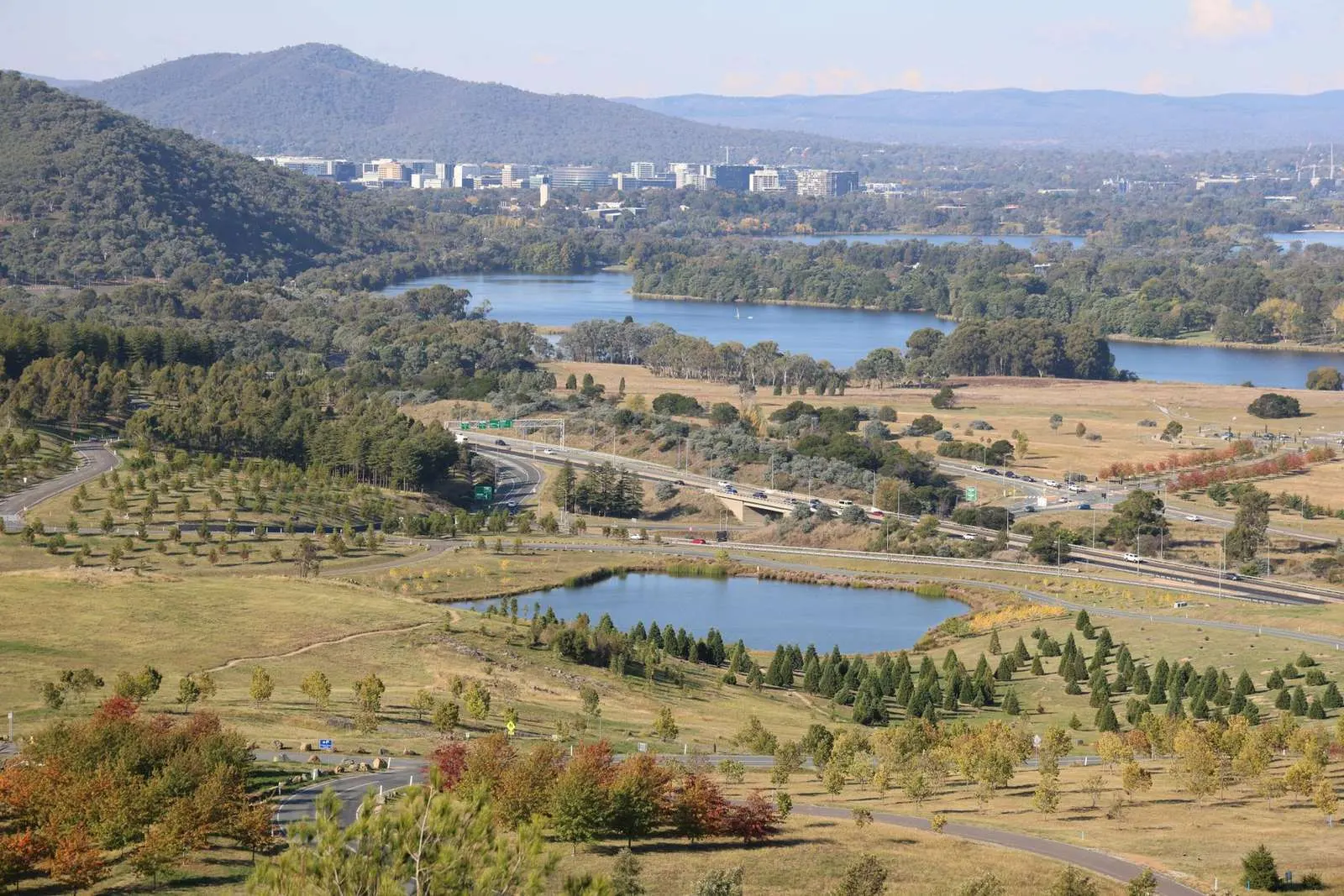
Not sure where to begin with things to do in Canberra? Start with the lake loop, the national museums and the bushland reserves at the city’s edge. You’ll find something for every season.
| Item | Value |
|---|---|
| Lake Burley Griffin bridge-to-bridge loop | Five-kilometre loop |
| Paved bike paths around the lake | 40 kilometres |
| Canberra Centenary Trail | 145 km in seven sections |
| National Arboretum Canberra | 44,000 trees, six kilometres from the city centre |
| Tidbinbilla Nature Reserve | 40-minute drive from the city centre |
| Boutique art galleries | 30+ galleries |
These figures come from VisitCanberra’s outdoor adventures guide and its checklist of iconic activities. They can change, so check the source before you rely on them.
Lake Burley Griffin and the bridge-to-bridge loop
The lake is the natural place to start. VisitCanberra’s outdoor adventures guide describes the five-kilometre bridge-to-bridge loop as a popular route for walking, running, scooting or cycling, with some of the best views in the inner city.
Cyclists have more room to roam. VisitCanberra’s checklist of iconic activities mentions 40 kilometres of paved bike paths around the lake, and it also lists e-scooter hire for reaching the museums and galleries nearby.
Electric boats are another option. The outdoor adventures guide from VisitCanberra says GoBoat and Love Boat hire needs no boating licence, but bookings are essential, so confirm details with the operator before you go.
For a sunset cruise, HerCanberra’s outdoor roundup suggests timing a guided boat trip so the colourful skies and the silhouette of the Brindabellas surround you. It adds that MV Southern Cross and Lake Burley Griffin Cruises both run regularly in the warm months.

Museums, galleries and national institutions
Canberra is well known for its national attractions, and VisitCanberra’s checklist of iconic activities notes that many offer free entry and tours. Charges and opening hours can change, so check each venue’s own website before you go.
For a deeper look at each venue, read this guide to canberra museums and galleries.
- Parliament House and the National Museum of Australia: VisitCanberra calls Parliament House one of the world’s most architecturally acclaimed buildings. It describes the museum’s objects as ranging from bark paintings and ochre used by Aboriginal artists to a Holden prototype.
- Australian War Memorial and National Library of Australia: the same VisitCanberra page mentions placing a poppy on the Roll of Honour at the memorial and over 10 million items at the library.
- National Gallery of Australia: VisitCanberra says it holds the largest collection of Aboriginal and Torres Strait Islander art in the world.
- National Portrait Gallery: the same page recommends it for understanding the Australian people through portraiture.
- Boutique galleries: the checklist points to Canberra’s 30+ boutique art galleries, listed with free entry.
Bushland, peaks and nature reserves
Canberra’s bush sits close to the centre. VisitCanberra’s top things-to-do page says approximately 70% of the ACT is dedicated to nature parks.
Short climbs give quick views. VisitCanberra describes the Mount Ainslie summit walk as short but steep, with sweeping city views and a chance to spot kangaroos on the way down. The Australian War Memorial stands at the foot of the mountain, and another VisitCanberra page also points walkers to Mount Painter and Black Mountain.
If you want more viewpoints around the city, see this guide to canberra lookouts.
The National Arboretum Canberra is six kilometres from the city centre and holds 44,000 rare and culturally significant trees, according to VisitCanberra. Visitors can walk, cycle, ride a horse or take a bus tour through the forests.
The Australian National Botanic Gardens are listed in the VisitCanberra checklist with free entry and over 4500+ native plants. Entry terms can change, so confirm them with the gardens before you travel.
Tidbinbilla Nature Reserve is a 40-minute drive from the city centre, per VisitCanberra’s outdoor adventures guide. That guide points to the Koala Path, the Sanctuary Loop and the Camel’s Hump trail. VisitCanberra’s top things-to-do page sets a challenge to spot five native animals there: the koala, platypus, kangaroo, emu and wombat.
Namadgi National Park sits on the northern edge of the Australian Alps and is criss-crossed with trails. According to VisitCanberra, the Booroomba Rocks walking track from the car park is 2.5 km return, while the route from Honeysuckle Campground is 10.5 km return.
The Canberra Centenary Trail loops the city for 145 km in seven sections, as the same guide explains. It adds that experienced hikers and cyclists may be able to combine several legs.
Outdoor options go beyond walking, according to VisitCanberra and its checklist:
- Treetops Adventure at Majura Pines, with aerial courses and zip lines designed for all ages and skill levels.
- Public stargazing nights at Mount Stromlo Observatory, or bring your own telescope.
- A hot air balloon flight for a bird’s-eye view of the city.
For a wider view of trails, water and sport, read this overview of outdoor activities in canberra. Trail conditions, closures and weather or fire warnings change, so check with the land manager before you set out.
Food, markets and wine
Braddon is a few minutes’ walk from the city centre, and VisitCanberra describes it as a shopping and foodie precinct of boutiques, cafes, bakeries, restaurants and bars. Lonsdale Street is its independent-store heart, with local makers and creatives.
Weekend markets are a popular way to eat and browse, and VisitCanberra’s top things-to-do page lists several:
- Capital Region Farmers Markets on Saturday morning, where you can buy fresh produce directly from the growers.
- Old Bus Depot Markets every Sunday, with the Canberra Glassworks next door.
- Haig Park Village Market each Sunday.
- Hartley Hall Markets on the first Sunday of the month.
Market days and hours change, so check each market’s own page before you plan a morning around it.
Wine is close at hand. VisitCanberra cites 140 vineyards and 50 wineries within 35 minutes’ drive of the capital, with Chardonnay, Riesling, Pinot Noir and Shiraz traditionally thriving. Time Out counts more than 40 boutique vineyards, so treat any single total as approximate.
Beer drinkers can try Capital Brewing Co in Fyshwick, which VisitCanberra says has a spacious beer garden. The same page ties fresh truffles to winter, and the checklist adds truffle hunts where dogs locate the finds.

What suits kids, wet weather or a day away?
For families, VisitCanberra highlights Questacon, the National Zoo and Aquarium, a tour of the National Dinosaur Museum and a 1.2 kilometre alpine slide at Corin Forest. The checklist adds two more family stops:
- The Royal Australian Mint, listed with free entry.
- Cockington Green Gardens, with handmade miniature replicas of buildings from around the world.
More ideas sit in this guide to family activities in canberra.
When rain arrives, the museums and galleries above are the obvious starting point. This list of rainy day activities canberra collects more indoor ideas.
A spare day opens up the wine district, Tidbinbilla and Namadgi, all within a drive of the city according to the sources above. For routes that reach beyond the ACT, see these day trips from canberra.
Planning your visit by season, budget and access
Tourism Australia calls Canberra a year-round destination with warm summers and crisp winters. VisitCanberra pairs the seasons with lake adventures in summer, stunning autumn views, fresh truffles in winter and floral festivals in spring.
That page names Floriade in spring, Summernats in summer, Enlighten Festival and the Canberra Balloon Spectacular in autumn, and The Truffle Festival in winter, as listed by VisitCanberra. Dates change each year, so see this guide to canberra festivals and events and confirm details with each organiser.
Getting around is straightforward because of the city’s compact size, according to Tourism Australia. It lists walking and biking as great ways to see what is on offer.
Budget visitors can lean on the free-entry attractions mentioned above. This round-up of free things to do in canberra collects more ideas.
If a visit has you wondering about staying longer, this overview of living in canberra covers the everyday side of the city.
A sample weekend
Time Out’s Australia editor describes her ideal Canberra weekend as four stops:
- Catch up with friends over a lap of Lake Burley Griffin.
- Take a big wander through the National Portrait Gallery.
- Hunt for pastries at the Capital Region Farmers Market.
- Watch the sunset from the top of Mount Ainslie.
This independent guide summarises published sources and does not run, sell or book any activity mentioned. Check opening hours, closures and safety advice with the venue or land manager before you travel.
Frequently asked questions
How long does the bridge-to-bridge walk take?
Show answer
VisitCanberra suggests spending an hour on the path, with a coffee stop along the way, in its top things-to-do page. Allow longer if you want to step into lakeside galleries.
Where can you see native animals near the city?
Show answer
Mulligans Flat Woodland Sanctuary is listed for endangered spotted quolls, with free entry noted in the VisitCanberra checklist. Entry terms can change, so check with the sanctuary first.
Is Canberra practical for visitors with limited mobility?
Show answer
Tourism Australia says Canberra Airport provides assistance for people with disabilities. It also notes ramp access at light rail stations, lowered ramps on buses, and a Flora Explorer mini-bus through the botanic gardens.
Can you relax on the lake as well as sightsee?
Show answer
The VisitCanberra checklist lists Floating Sauna on Lake Burley Griffin as a relaxation stop: a wood-fired sauna overlooking the water, then a dip in the lake. Check session details with the operator.